Pathways to Impact: co-developing climate resilient nature-based solutions in the seven ALBATROSS hubs
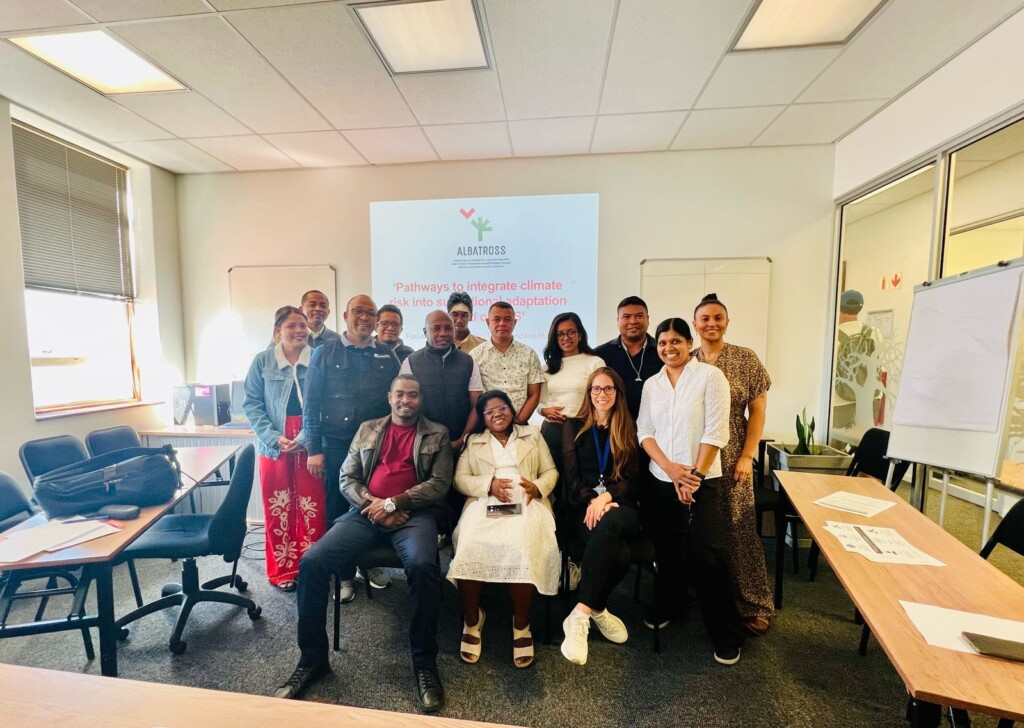
The ALBATROSS partners at the ACDI’s People in Nature & Climate (PiNC) Lab of the University of Cape Town, South Africa, have co-developed pathways to integrate climate risk into subnational adaptation plans centered on Nature-based Solutions (NbS).
Nature-based solutions are well-known measures to achieve the Sustainable Development Goals, as they enhance ecosystem health, improve human well-being, and address climate challenges. Nature-based solutions include activities towards protection, restoration, and sustainable management are increasingly being adopted in Sub-Saharan Africa. However, climate change can undermine their effectiveness. One way this challenge can be addressed is through the provision of tailored climate services, which involve the use of climate-related data to provide better projections, forecasts, trends and counselling. However, effective integration of climate services into NbS requires development of a multi-actor (multi-level) co-production system and process that is iterative, reflective and follows the principles of co-production.
In the ‘Pathways to Impact’ approach proposed by the ALBATROSS team, a sequence of practical steps of engagements has been determined to shift each of the seven CRD Network Hubs into a trajectory towards climate resilient nature-based solutions, which integrate adaptation efforts for sustainable development. This was done through analysing a series of continuous Decision Points (DP1-4) to shift the system towards higher climate resilient nature-based solutions. The starting point included a description of the present situation within the Hub which often includes compromised human wellbeing and ecosystem health due to changing climate risk and poorly-planned nature-based solutions, whereas the ending point is a specific goal that aims to provide climate resilient nature-based solutions, which successfully integrate climate services, for increased wellbeing and ecosystem health for the Hub. Decision Points define who acts and when, arranged sequentially, with choices at each stage shaped by six contextual factors: human capacity, technology and information, socio-economic and socio-cultural conditions, governance, and resources.
Although contexts are Hub-specific, all the pathways share the same four-step Decision Point framework and the objective of each Decision Point. The process begins with baseline engagements and climate and NbS sector-specific research that are multi-actor and transdisciplinary (DP1), moves on to co-creating integrated information and data for usable and useful nature-based solutions (DP2) and building the climate literacy and capacity of different actors (DP3), and ends with disseminating and raising awareness of the co-developed solutions via appropriate community systems to ensure successful uptake (DP4).
The co-developed Pathways to Impact developed for each Hub will help guide future ALBATROSS work, with a focus on co-creation and policy engagement, strengthening climate services for NbS, and co-producing practical NbS guidance. Hub-specific Pathways to Impact focuses on integrating climate services to inform the following nature-based solutions:
1. Restoring degraded mangroves and creating climate-smart community woodlots in Keta Basin Hub in Ghana.
2. Sustainable urban drainage systems in Kumasi Hub in Ghana.
3. Sustainable rangeland management in Turkana County Hub in Kenya.
4. Restoring and protecting mangroves and supporting sustainable crab harvesting and farming in Morondava District Hub in Madagascar.
5. Multi-crop, climate-smart agroforestry in Tamatave District Hub in Madagascar.
6. Sustainable rangeland management in Umzimvubu Catchment Hub in South Africa.
7. Restoring mangroves and supporting sustainable bee-keeping practices in Kigamboni District Hub in Tanzania.
Share on Facebook Share on Twitter Share on Pinterest