How resilient are nature-based solutions to climate change over the coming decades—and where will they still work by the end of the century?
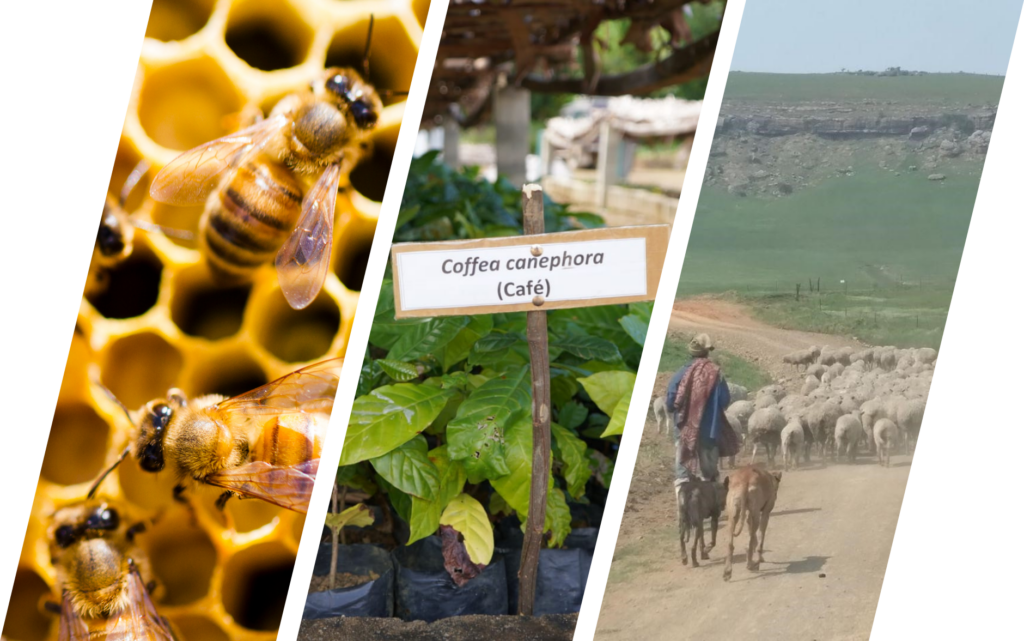
Researchers at the University of Cape Town (South Africa) have modelled how biodiversity linked to nature-based solutions could shift under future climate and socio-economic scenarios between now and 2100. They focused on assessing climate change impacts on biodiversity relevant to nature-based solutions across the seven ALBATROSS hubs, covering different time periods. This will serve to identify priority areas within the seven ALBATROSS hubs where nature-based solutions are likely to be most stable and effective under future climate scenarios
Using species distribution models (SDMs) developed for the study, they quantified how the suitability and stability of species associated with nature-based solutions may shift under alternative climate futures in 2040, 2070, and 2100, and predicted their temporal and spatial distributions. These projections allowed the team to move beyond present-day assessments and explore how climate change may reshape the ecological foundations of nature-based solutions over time. These predictions led to the definition of indicators of change for each nature-based solution, guiding which species and locations are likely to be most stable and effective as nature-based solutions.
For each nature-based solution analysed, the following inputs were used: species richness (number of species present), species persistence (number of species predicted to remain present), species loss (number of species predicted to be absent at certain point), and community turnover (similarity in species assemblages in different periods). Together, these indicators capture both the magnitude and the nature of ecological change expected under future climates. The results of all these inputs can be accessed via the following link: https://vervis.github.io/ALBATROSS_NbS/
They managed to model 17 hub-specific nature-based solutions, and they identified 80 species associated with these nature-based solutions. The 17 nature-based solutions were associated with eight ecosystem services, with coastal protection and natural resource-based livelihoods being the most common across all hubs. Nature-based solutions within these two ecosystem services include mangrove restoration (analysed in Keta, Kigamboni, and Morondava), beekeeping in mangroves (studied in Keta, Kigamboni, Morondava, and Turkana), and woodlots and agroforestry (analysed in Keta, Tamatave, and Turkana).
Stability varied considerably across types of nature-based solutions but far less so across hubs for the same types of nature-based solutions, and across future climates. Mangrove-based nature-based solutions consistently showed high stability across hubs and time periods, whereas beekeeping was characterised across hubs by much lower stability. Tree-based nature-based solutions such as woodlots, reforestation, and agroforestry displayed intermediate and more variable outcomes across the hubs.
Researchers warned that while this approach enables spatially explicit projections, it does not capture the full ecological and functional processes that drive ecosystem service provision. Similarly, they admit that the reliability of the species distribution models is constrained by the choice and accuracy of environmental covariates, and climate projections’ accuracy at the hub scale is uncertain. However, they recognise the potential of this study to provide information to guide conservation planning, policy decisions, and investment in nature-based solutions. In doing so, the work offers an evidence-based starting point for identifying climate-resilient nature-based solutions and directing resources where they are most likely to deliver long-term benefits.
Share on Facebook Share on Twitter Share on Pinterest