ALBATROSS at the 8th AfriMAB General Assembly, Livingstone, Zambia
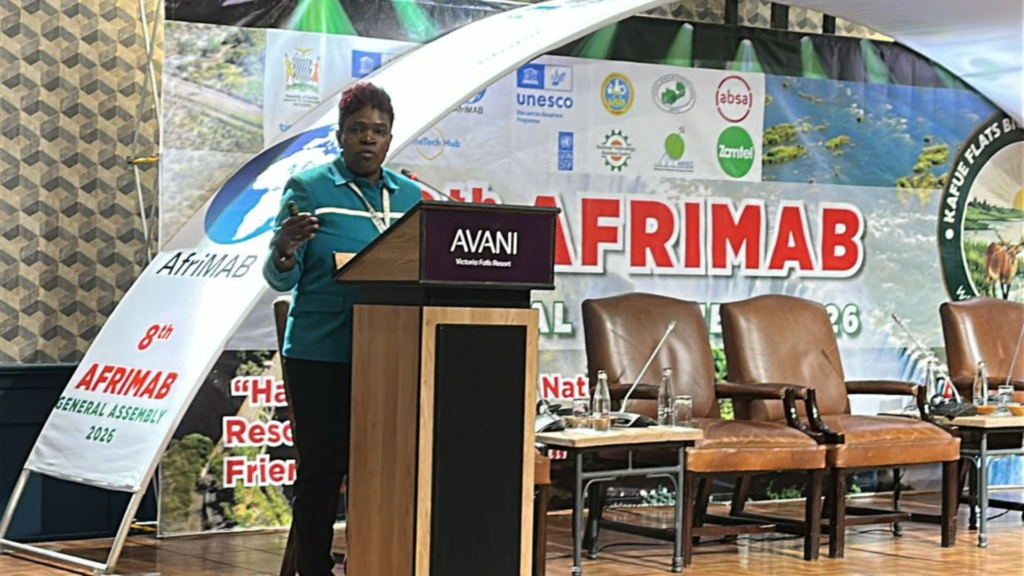
The 8th AfriMAB General Assembly, held in Livingstone from 9th -13th March 2026 under the theme “Harnessing Africa’s Natural Resources through Ecosystem-Friendly Technologies”. The Assembly brought together 154 participants from 32 countries, including policymakers, CSOs, Biosphere Reserve managers, NGOs, and development partners. Among them were managers from the five countries hosting ALBATROSS Climate Network Hubs.
Dr. Mary Nyasimi from UNESCO Regional office in Nairobi presented the ALBATROSS project, highlighting its holistic approach to climate resilience through harnessing climate science to understand the complex interactions between climate, ecosystems and societies. By integrating robust climate data, equity-focused socio-economic insights, and community-driven knowledge, ALBATROSS advances scalable, culturally grounded Nature-Based Solutions (NbS).
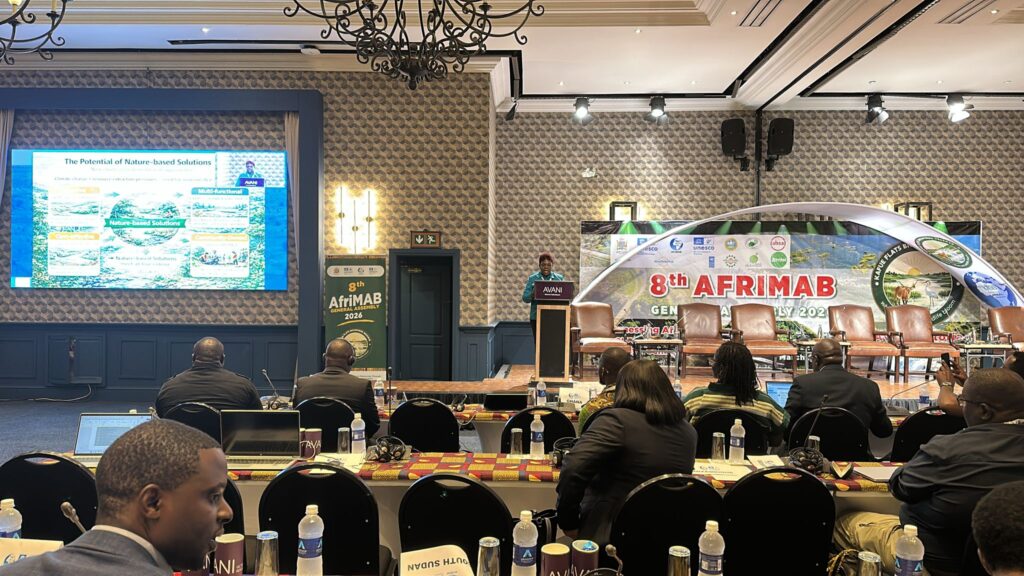
Africa Policy Readiness for Nature-based Solutions
ALBATROSS conducted one of Africa’s most comprehensive policy reviews, analyzing over 250 documents across Kenya, Tanzania, Madagascar, Ghana, and South Africa. Key findings included:
- On progress, over 70% of policy frameworks referenced ecosystem-based approaches such as restoration, watershed protection, and agroforestry.
- Main gaps were that few frameworks explicitly used “Nature-Based Solutions” or adopted cross-sectoral strategies. Rangelands, vital for pastoral livelihoods, were underrepresented compared to forests, freshwater and coastal ecosystems.
- Challenges were that the limited innovative nature-financing and weak monitoring frameworks hindered implementation at scale.
This analysis provides a roadmap for strengthening policy coherence, institutional alignment, and nature-financing mechanisms to scale NbS actions.
Living Labs: From Policy to Practice
ALBATROSS is demonstrating NbS through Climate Resilient Hubs in five countries:
- Ghana (Keta Basin and Kumasi): Wetland and mangrove restoration and the use of the Citizen Science Toolkit for the real-time monitoring and protection of urban wetlands and riparian buffer zones
- South Africa (Umzimvubu): Rangeland restoration via invasive species removal, rotational grazing, and Indigenous fodder planting.
- Madagascar (Morondava & Tamatave): Mangrove restoration and agroforestry for coastal protection, biodiversity and livelihoods.
- Kenya (Turkana): Drought resilience through rangeland restoration, drought-resistant trees, and climate-smart agriculture.
- Tanzania (Kigamboni): Mangrove replanting and wetland protection linked to beekeeping and seaweed farming.
These hubs integrate ecosystem restoration, climate adaptation, and livelihood improvement through strong community leadership.
Why ALBATROSS Matters
Dr. Nyasimi final remarks underscored that ALBATROSS demonstrates that NbS are practical, adaptable tools for sustainable development. They align with Biosphere Reserves as living laboratories where conservation, development, and learning intersect. The project bridges evidence and action, showing that Africa’s climate future depends on:
- Stronger cross-sector integration
- Broader ecosystem coverage
- Innovative nature-financing mechanisms
- Deeper community engagement
- Gender-disaggregated monitoring
As Dr. Nyasimi concluded: “Nature, when strategically restored and sustainably managed, is not just part of the solution. It is the solution.”
Share on Facebook Share on Twitter Share on Pinterest