Training trainers on nature-based solutions
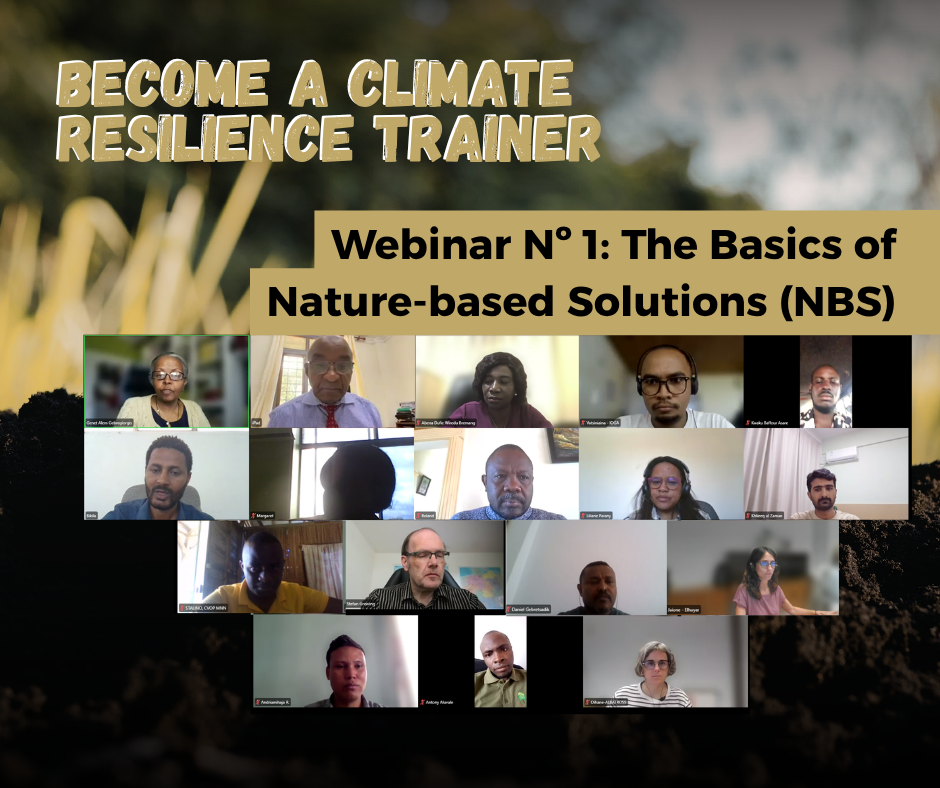
On 27 April 2026, a training of trainers session was organised within ALBATROSS to help vulnerable communities move beyond traditional coping mechanisms that are no longer sufficient in the face of escalating climate shocks. By integrating nature-based solutions (NbS) with data-driven Climate Services (CS), this program empowers local leaders to build long-term resilience and protect food, water, and economic security.
This session, which was attended by 40 participants, focused on nature-based solutions and their potential for disaster risk reduction. It also explored the opportunities these solutions offer and the challenges they face in contributing to sustainable agriculture, as well as the importance of involving private landowners in implementing NbS on their land.
Coordinated by the partner from the Technical University Dortmund, Genet Alem Gebregiorgi, this session included three presentations by experts on NbS and their implementation in Sub-Saharan Africa, both from the ALBATROSS consortium and outside it:
- Prof Wilbard Kombe, from the Institute of Human Settlements Studies (IHSS), Ardhi University (Tanzania) offered insights for understanding NbS, focusing on their experience in Dar es Salaam. He discussed the benefits of Nbs, including their capacity for climate change adaptation and disaster risk reduction. He stressed the need to link NbS initiatives with urban land/spatial planning systems, for them to be really effective, resilient and sustainable to climate change.
- Dorcas Agyei, head of IUCN’s Ghana Project Office and coordinator of the NbS Guinean Forest Project, presented a set of criteria for proper NbS management, giving examples of NbS actions in agriculture, such as converting organic waste into compost, vegetable farming and fertilising gardens with products produced from NbS activities, for pest management, etc.
- Stefan Greiving, from the Technical University Dortmund (Germany), focused on spatial planning. Although his examples and insights came from his experience in Germany, they were transferable to Sub-Saharan African countries
The training session, which captured the audience’s interest, incited interesting discussion and questions.
Share on Facebook Share on Twitter Share on Pinterest