Training in the co-production and implementation of nature-based solutions
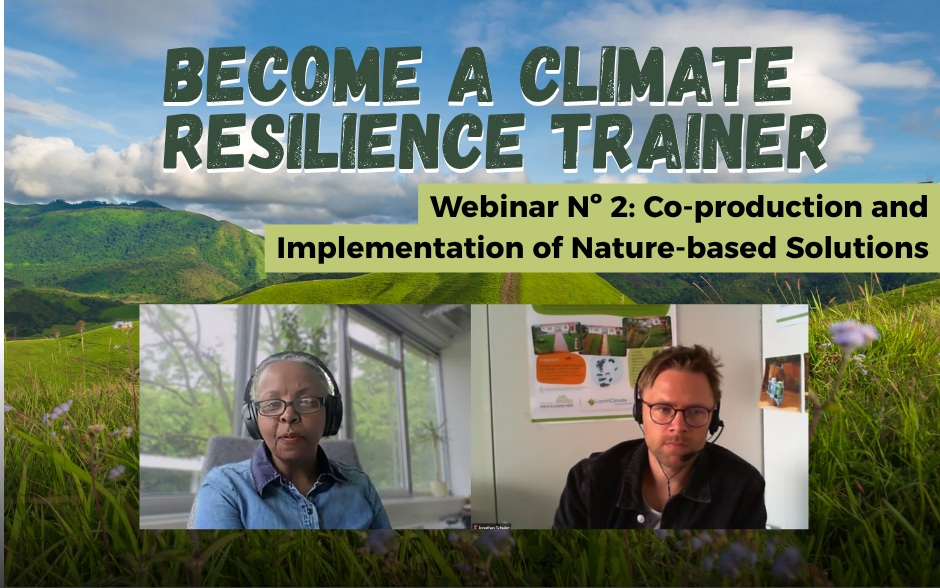
On 2 June 2026, a training of trainers session titled “Co-production and Implementation of Nature-based Solutions” was organised within the ALBATROSS project to help vulnerable communities move beyond traditional coping mechanisms that are no longer sufficient in the face of escalating climate shocks. By integrating nature-based solutions (NbS) with data-driven Climate Services (CS), this program empowers local leaders to build long-term resilience and protect food, water, and economic security.
The second session of the “Become a Climate Resilience Trainer”, which was attended by more than 40 participants, demonstrated a case of NbS implementation on private rural land in flood- and drought-prone Euskirchen district, highlighting three measures (Miscanthus buffers, Tiny Forest, depaving) and fostering private landowner stewardship for climate adaptation and biodiversity.
Coordinated by the partner from the Technical University Dortmund, Genet Alem Gebregiorgi, this session included a presentation by an expert on NbS and the implementation in Sub-Saharan Africa:
- Jonathan Schulze, Project Manager of Land4Climate for the County of Euskirchen, Team County Development and Planning, offered insights for the implementation of NbS on private land by a regional public administration in a rural county in Germany. He was based on the EU LAND4CLIMATE project and aimed to provide insights into how NbS can be implemented on private land in a rural region of continental Europe that is particularly affected by flooding, heavy rainfall, and droughts. He highlighted the challenges, opportunities, and obstacles in the practical implementation of NbS in the district of Euskirchen. Three exemplary measures were highlighted: the cultivation of Miscanthus as a vegetative buffer zone to mitigate flooding and droughts; the creation of a 380 m² “Tiny Forest” to improve urban cooling, biodiversity, and social awareness; and a partnership with homeowners to remove impervious surfaces in order to restore natural water infiltration and reduce heat stress. The presentation highlighted the positive side effects for climate adaptation, biodiversity, and local engagement, as well as the question of how private landowners can become active supporters and long-term stewards of these NbS on their private properties.
The training session concluded with an interactive Q&A and open discussion, allowing all participants and presenters to exchange final insights.
Share on Facebook Share on Twitter Share on Pinterest