Training on how ALBATROSS combines agroforestry, digital tools, and meteorological information
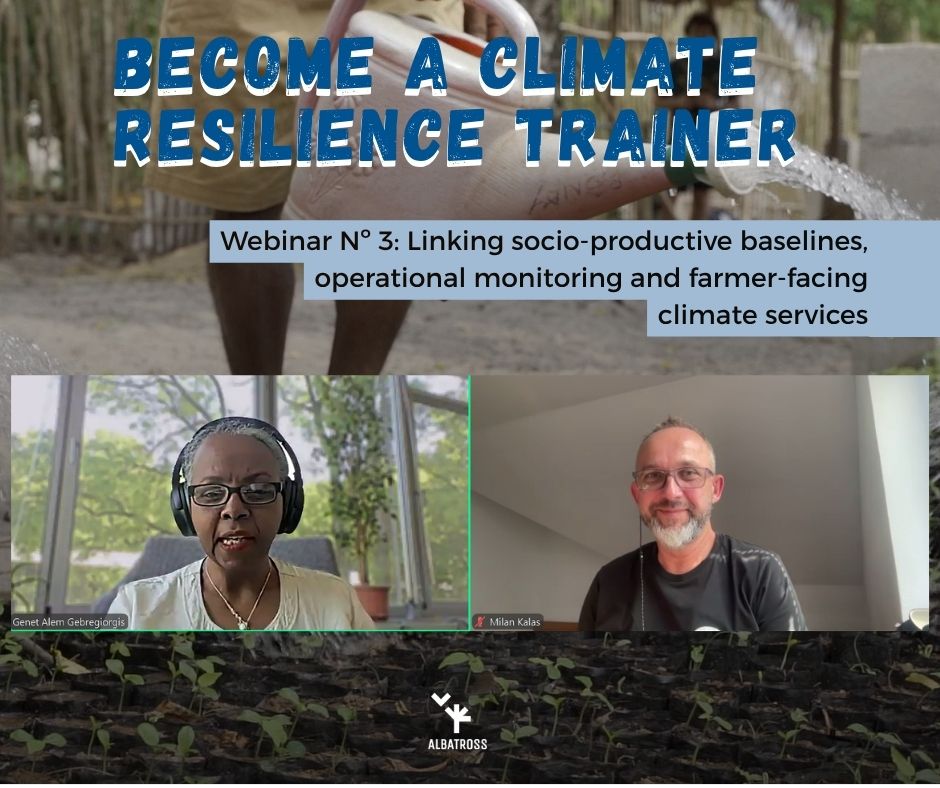
On 29 July 2026, the ALBATROSS project hosted the third session of its “Training of trainers” webinar series, organised by project partner Genet Alem (TUDO). Designed to build local capacity on climate adaptation, boost technical proficiency, and foster the integrated use of project-developed solutions, this online training focused on presenting digital tools created to empower farmers in their agroforestry and conservation activities. The session brought together 25 participants and was co-delivered by Arthur Bostvironnois (Bôndy), coordinator of the Tamatave hub, and Milan Kalas (Kajo), who led the technical development of these digital tools.
Setting the context, Arthur presented an overview of the Tamatave hub in eastern Madagascar, highlighting the need they addressed to translate and adapt the complex information the project researchers access regarding weather information and technical information for agroforestry practices to farmers, so that this information is accessible and understandable for farmers. Building on this operational context, Milan detailed the continuous, iterative development of the Needs-Based Adaptation Toolkit and the AgriSupport application, emphasising how the software was refined through a back-and-forth co-design process directly involving local farmers. The resulting system categorises diverse adaptation measures, such as agroforestry systems, mangrove restoration, and honey production, to provide farmers with both early meteorological alerts and practical guidance on maximising performance through proper land management. By combining insights from highly committed local practitioners with official meteorological data and links to external instructional tutorials, the toolkit bridges scientific information with field-level agricultural decisions, ensuring that community leaders are fully trained to pass this knowledge down to local farmers.
In the final portion of the webinar, Arthur outlined the ambitious strategy to scale and adapt this methodology across all the ALBATROSS hubs, tailoring the tool to support the improvement of both ecosystems and local communities’ livelihoods. In the Kigamboni hub, for instance, the application is being adapted to support integrated mangrove restoration for honey production by monitoring individual beehives alongside mangrove flowering cycles and rainfall impacts, directly linking ecosystem health to improved household livelihoods. Similarly, in the Morondava hub, the system will map the connections between mangrove health, coastal protection, and local fishery yields. The final aim is that these multi-dimensional tools equip local authorities, non-governmental organisations, and communities with actionable data to co-design pathways for climate resilience.
Share on Facebook Share on Twitter Share on Pinterest